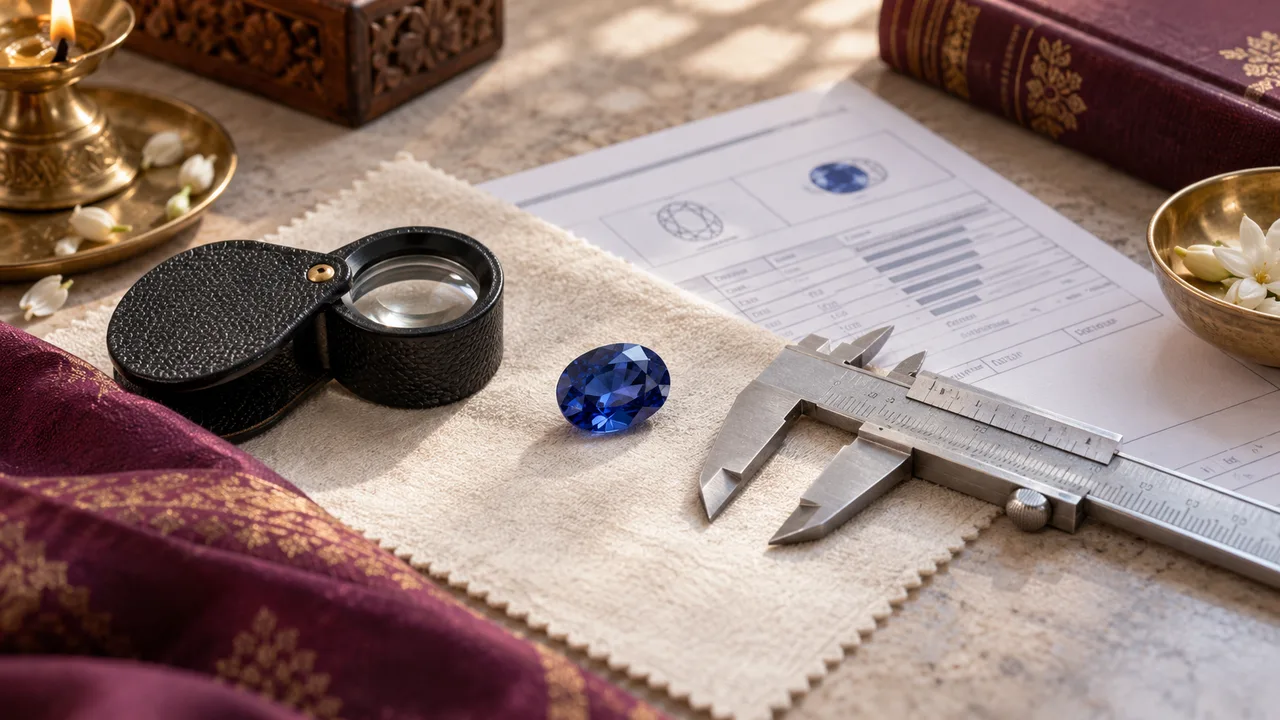
A laboratory report identifies a stone. It does not promise what wearing it will do for your life.
Read the identification first
GIA's coloured-stone identification reports describe the gemstone, whether it is natural or laboratory-grown, and detectable treatments. Report formats and services differ between laboratories, so ask exactly what the document covers.
Check that it describes your piece
Look at the photograph and the recorded shape, measurements and weight where supplied. Ask the seller to explain any mismatch. For a significant purchase, do not rely on an image of a report that cannot be connected to the piece in front of you.
Verify through the issuing laboratory
Use the laboratory's own verification service where available. A seller's listing, a branded pouch or a decorative certificate is not the same as independent identification.
- Who issued the report?
- Which tests or services does it cover?
- Can its details be checked with the issuer?
- Is the documented piece the one being supplied?
Know what remains outside it
Do not read spiritual suitability, a guaranteed resale price or a health outcome into an identification report. For a purchase, settle the description, total cost and return terms separately in writing.
Sources & scope
- GIA: sample coloured-stone reports Report scope, identification and detectable treatments.
Educational demo for review, not Narayani’s approved advice, a product recommendation or a promise of health or financial outcomes.